

The Taj Mahal doesn’t look the same twice. Depending on when you walk through its gates, the white marble can appear soft and pale, warm and golden, or somewhere in between, and the atmosphere shifts just as much as the light does. For travelers planning a trip to Agra, this raises a practical question: is sunrise or sunset better for visiting the Taj Mahal?
The honest answer is that both have real advantages. The right choice depends on your travel style, your tolerance for early mornings, and what you want from your photographs — lighting, atmosphere, temperature, and your overall schedule all shift between the two options.
This guide walks through the Taj Mahal sunrise vs sunset debate from every practical angle, so you can decide which visit fits your trip.
Taj Mahal Sunrise vs Sunset: Quick Comparison
Before going into detail, here’s a balanced snapshot of how the two options generally compare.
- Lighting: Sunrise brings softer, cooler-toned light with gentle shadows; sunset brings warmer, golden tones, though both vary with weather and season.
- Photography: Morning light suits symmetrical, architectural shots; evening light suits warm-toned and silhouette-style images. Neither is objectively better.
- Atmosphere: Mornings feel calm before the day gets underway; evenings carry a more relaxed, wind-down energy.
- Temperature: Early mornings are usually cooler than late afternoons, which matters most in warmer months.
- Crowds: Visitor numbers vary by day and season, so it’s not accurate to promise one time is consistently quieter.
- Travel convenience: Sunrise means an earlier start; sunset allows a slower morning and later departure.
- Best for couples: Both work well, depending on whether you prefer quiet morning light or a warm evening glow.
- Best for photographers: Depends entirely on the style of shot you’re after.
- Best for first-time visitors: Sunrise is often recommended for a classic first experience, though sunset suits a tighter or later schedule just as well.
- Best for Delhi day-trippers: Both are workable, but each shapes your itinerary differently — more on that below.
Visiting the Taj Mahal at Sunrise
Soft Morning Light
As the sun comes up, daylight tends to be gentler and more diffused than it is later in the day. This can bring out subtle detailing on the marble and create soft shadows across the domes and minarets, rather than the harsher contrast that midday sun can produce.
Morning Atmosphere
There’s a particular stillness to being at a major monument early in the day, before the wider city has fully woken up. Many visitors describe the early hours as a quieter, more contemplative time to take in the Taj Mahal, though exact conditions will vary from one visit to the next.
Cooler Weather
Agra can get hot, especially from April through June. Arriving early means you’re sightseeing during the coolest part of the day, which can make walking around the complex noticeably more comfortable — particularly if you’re also planning to visit Agra Fort or other sites afterward.
Sunrise Photography
Photographers often favor early light because it’s more forgiving for architectural shots, reduces harsh highlights on white marble, offers calmer conditions at the reflecting pools for symmetrical compositions, and gives even, shadow-free lighting for portraits. Exact colors and lighting effects still depend on cloud cover, haze, and season, so it’s worth keeping expectations flexible rather than chasing one specific look.
Visiting the Taj Mahal at Sunset
Warm Evening Light
As the afternoon shifts into evening, sunlight often takes on warmer, golden tones. This can change how the marble appears, sometimes taking on soft amber or pink hues as the sun gets lower — though this, too, depends on weather and atmospheric conditions on the day.
Sunset Photography
Evening visits open up a different set of options: golden-hour light for warm, glowing architectural shots, a lower sun angle that makes silhouette-style photography easier, a romantic warmth that suits couple photography, and softer glare that’s generally forgiving for casual smartphone shots.
Evening Experience
A sunset visit fits naturally at the end of a full day of sightseeing. Instead of rushing out before dawn, you get to ease into your day and arrive at the Taj Mahal as a closing highlight rather than an opening one.
Who Should Choose Sunset?
Sunset visits tend to suit travelers who prefer a slower, more relaxed morning, don’t want a pre-dawn wake-up call, have a flexible Agra itinerary with time to spare later in the day, or are specifically after warm, golden-hour photography.
Sunrise vs Sunset for Photography
Photography is one of the biggest deciding factors for many travelers, so it deserves a closer look.
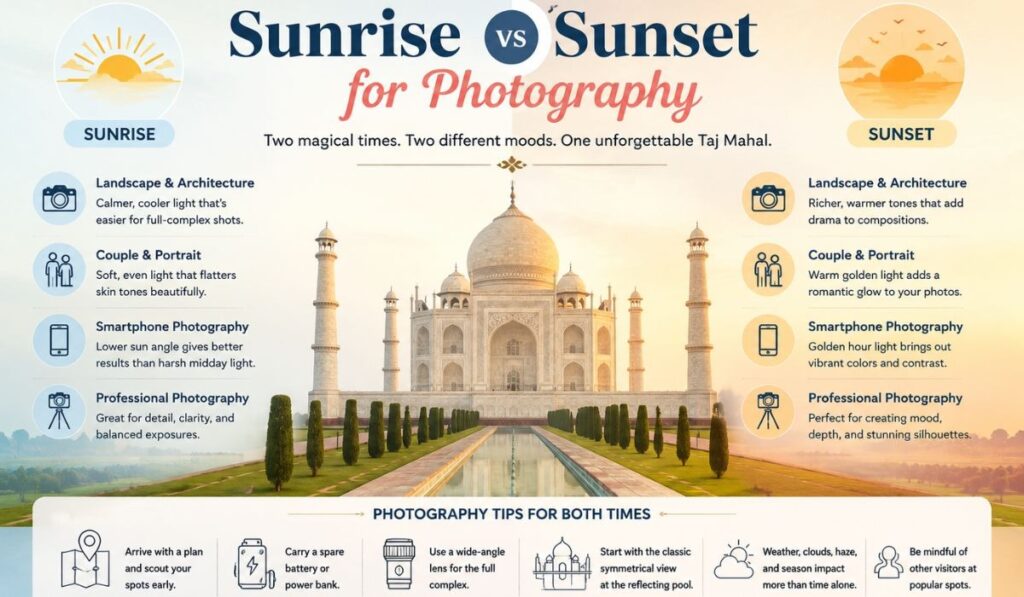
- Landscape and architecture photography: Sunrise generally offers calmer, cooler light that’s easier to work with for full-complex shots. Sunset offers richer, warmer tones that can add drama to the same compositions.
- Couple and portrait photography: Both work well. Morning light is softer and more even for skin tones; evening light adds a warmer, golden cast that many couples like for romantic shots.
- Smartphone photography: Either time works, but the lower sun angle at both sunrise and sunset generally beats the harsh, flat light of midday.
- Professional photography: Serious photographers often plan around both, since weather, cloud cover, haze, and season all affect the final result more than the time of day alone.
A few practical tips apply regardless of the time you choose: arrive with a plan rather than rushing to find a spot, carry a spare battery or power bank, pack a wide-angle lens for the full complex, start with the classic symmetrical view along the reflecting pool before experimenting with side angles, and stay mindful of other visitors at popular photo spots.
Sunrise vs Sunset for Couples
Couples visiting the Taj Mahal — a monument built as a tribute to love — often want to know which time creates the more meaningful experience. Both have their own character. Sunrise offers a quieter, calmer setting, softer light for photos, and cooler temperatures for an early walk together. Sunset offers warm, golden tones many couples find flattering, plus a more relaxed lead-up to the visit itself.
It’s worth avoiding the idea that sunrise is automatically more romantic or that sunset is automatically less crowded, since actual conditions vary by day. A better approach is to choose based on your own travel rhythm — a calm early start if you’re happy to wake up early, or an easier morning if you’d rather ease into the day.
Sunrise vs Sunset for First-Time Visitors
For travelers seeing the Taj Mahal for the first time, the decision often comes down to energy levels and how the rest of your Agra day is structured.
- Sightseeing schedule: A sunrise visit lets you see the Taj Mahal first, then explore Agra Fort, local markets, or marble workshops without rushing.
- Travel time: Sunrise visits require a very early departure; sunset visits allow a more standard morning start.
- Energy levels: Some travelers prefer being alert early in the day; others prefer easing into sightseeing later.
- Other Agra attractions: A sunrise-first approach leaves more daylight hours free for the rest of the city.
- Returning to Delhi: Same-day visitors need to factor return travel time into whichever option they choose.
For most first-timers, a sunrise visit followed by a full day of Agra sightseeing makes efficient use of the day, though a sunset-focused itinerary works well for those who’d rather not start before dawn.
Which Is Better for Travelers Coming from Delhi?
This is where the sunrise-vs-sunset decision has the most practical impact, since it shapes your entire day: Delhi → Agra → Taj Mahal → Agra sightseeing → Delhi.
If you choose a sunrise visit, you’ll typically need to leave Delhi in the very early hours to reach Agra in time. It makes for a long day, but lets you fit in the Taj Mahal, Agra Fort, and other sights before heading back in the evening — which is why many same-day travelers lean toward this structure. A sunset visit allows a later, more comfortable departure from Delhi, but your Agra sightseeing needs to happen earlier so you can end at the Taj Mahal before the return journey.
Transportation choice matters too. A private car gives you flexibility over departure time and stops along the way, which suits early sunrise departures particularly well — India Beyond Travel’s Taj Mahal Tour From Delhi By Car is built around this kind of flexible, door-to-door schedule. Travelers who’d rather skip early-morning road traffic can consider the Taj Mahal Tour From Delhi by Superfast Train, while those wanting extra comfort for a long day on the road may prefer the Taj Mahal Tour By Luxury Car.
Whichever mode you choose, factor in departure time, sightseeing duration, and your return journey before deciding between sunrise and sunset.
What Is the Best Time of Year for a Taj Mahal Sunrise Visit?
Seasonal conditions affect comfort and visibility more than most people expect, though actual weather can change from day to day.
October to March generally brings more comfortable sightseeing conditions and cooler mornings, with occasional haze or fog, particularly in December and January. April to June brings noticeably hotter daytime temperatures, making an early sunrise visit more comfortable than sightseeing later in the day. July to September covers the monsoon season, with clouds and rain affecting visibility on some days, so it’s worth keeping plans flexible.
Since weather isn’t fully predictable, check current conditions and official visiting guidelines shortly before your trip rather than relying only on seasonal averages.
What to Bring for a Sunrise or Sunset Taj Mahal Visit
A short packing list can make either visit smoother:
- Comfortable walking shoes
- Water
- Sunglasses
- Camera or smartphone
- Power bank
- Light clothing suited to the season
- A light jacket for cooler mornings
- Valid travel documents and entry tickets
- Minimal luggage, since bag restrictions apply inside the complex
Taj Mahal Sunrise vs Sunset: Which One Should You Choose?
If you’re still deciding, this quick guide can help.
Choose sunrise if you:
- Enjoy soft, gentle morning light
- Don’t mind an early start
- Prefer cooler sightseeing conditions
- Want to prioritize morning photography
- Are comfortable planning around an early itinerary
Choose sunset if you:
- Prefer a relaxed, unhurried morning
- Enjoy warm, golden evening light
- Want golden-hour photography
- Have more flexibility built into your schedule
- Prefer sightseeing later in the day
For first-time visitors who prioritize the classic early-morning experience and photography, sunrise can be an excellent choice. Travelers who prefer convenience and evening light may find sunset more suitable. Neither option is objectively better — it comes down to what matters most for your trip.
Can You Combine a Taj Mahal Sunrise Visit with Agra Sightseeing?
Yes, and many travelers structure their day exactly this way. After an early visit, there’s usually enough of the day left to explore Agra Fort, a short distance away with its own Mughal history; Mehtab Bagh, a garden across the river offering a different view of the Taj Mahal; Itmad-ud-Daulah, sometimes called the “Baby Taj,” known for detailed marble inlay work; and local markets or marble craftsmanship workshops. Starting with sunrise leaves your afternoon free for this kind of same-day Agra itinerary, which is one reason it’s popular among day-trippers.
Is a Sunrise Taj Mahal Tour Worth It?
For many travelers, yes — but it depends on your priorities. A sunrise visit typically offers softer photography light, a calmer early atmosphere, and cooler temperatures, making it more comfortable outside the cooler winter months. The trade-off is the early wake-up call and, for Delhi-based travelers, a longer overall day.
If that doesn’t put you off, a sunrise visit is generally a strong way to experience the Taj Mahal, especially paired with a full day of Agra sightseeing afterward. India Beyond Travel’s Sunrise Taj Mahal And Agra Tour By Car is built around exactly this structure, with pickup options that simplify the early departure.
Frequently Asked Questions
Is sunrise or sunset better at the Taj Mahal?
Neither is universally better. Sunrise offers softer light and cooler temperatures; sunset offers warmer tones and a more relaxed morning beforehand. It depends on your schedule and photography preferences.
Is the Taj Mahal beautiful at sunset?
Yes. Evening light often brings warmer, golden tones to the marble, and many travelers enjoy sunset as a calm way to close out a day of sightseeing.
Is sunrise at the Taj Mahal worth waking up early for?
For many visitors, yes — the combination of softer light, cooler temperatures, and a quieter early atmosphere makes it a popular choice for photography.
What time is best for Taj Mahal photography?
Both beat midday. Sunrise tends to suit softer, architectural shots, while sunset suits warm-toned and silhouette photography.
Is the Taj Mahal less crowded at sunrise?
Visitor numbers vary by day and season, so it’s not accurate to guarantee lower crowds at any specific hour.
Can I visit the Taj Mahal at sunrise and Agra Fort afterward?
Yes, this is a common itinerary. A sunrise visit typically leaves the rest of the day free for Agra Fort and other nearby sights.
Can I visit the Taj Mahal from Delhi in one day?
Yes, same-day trips are common by car or train. Your choice of sunrise or sunset shapes your departure time and overall schedule.
What should I wear for an early morning Taj Mahal visit?
Light, comfortable clothing works well, with a jacket for cooler mornings between October and March, plus comfortable walking shoes.
Final Thoughts
There’s no universal winner in the Taj Mahal sunrise vs sunset debate. Sunrise suits travelers who want an early-morning atmosphere, softer light, cooler conditions, and strong photography before the day heats up. Sunset suits those who’d rather ease into their morning and enjoy warmer, golden-hour light later on.
Whichever you choose, the bigger factor is planning your Agra day around it — transportation, sightseeing order, and return travel all shift depending on your chosen time. If you’re visiting the Taj Mahal from Delhi, browse India Beyond Travel’s Taj Mahal Tour Packages to find an itinerary that fits your schedule and travel style.

Comments