
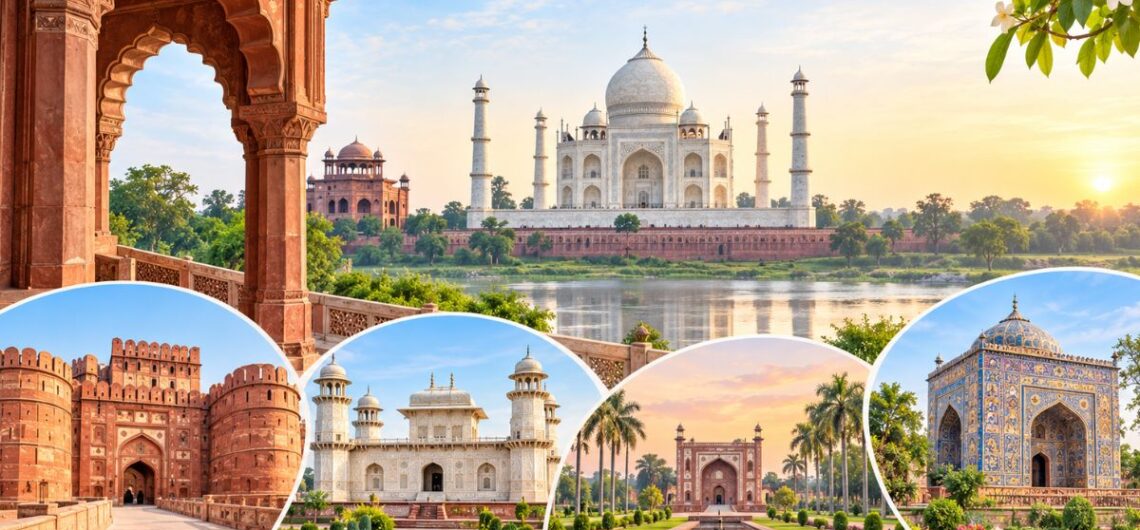
For most travelers, Agra begins with the Taj Mahal. However, the city offers much more than this famous monument. Its forts, tombs, gardens, and palaces tell a fascinating story of Mughal architecture. Agra’s architectural history developed over several generations. Akbar favored strong red sandstone structures. Jahangir introduced greater decorative detail. Later, Shah Jahan brought white marble and delicate stone inlay into the city’s royal buildings.
In brief: Mughal architecture in Agra reflects a blend of Indian, Persian, and Central Asian traditions. Agra Fort, Itmad-ud-Daulah, Sikandra, and Chini Ka Rauza each reveal a different part of this history. Together, these monuments help visitors understand how Mughal design changed over time. If you plan a trip to Agra, explore these sites beyond the Taj Mahal. Each one offers a different view of the city’s rich architectural heritage.
How Agra Became a Center of Mughal Architecture
Agra became an important Mughal city because of its location along the Yamuna River. The city also connected important trade routes across northern India. When Akbar made Agra his base in the 16th century, he began developing it into an important imperial center. His building projects reflected both royal power and regional craftsmanship.
Akbar preferred red sandstone for many of his major structures. His architects combined Indian building traditions with Persian planning ideas. This approach created a distinctive style of Mughal architecture. Jahangir continued this architectural tradition. His reign saw greater attention to gardens, decoration, and artistic details.
Later, Shah Jahan changed Agra’s architectural character. He favored white marble, balanced designs, and intricate stone inlay. These features became closely associated with his most famous buildings. Therefore, Agra’s monuments do not represent one single style. Instead, they show how Mughal architecture developed across different reigns.
Agra Fort: Where Mughal Architecture Evolved
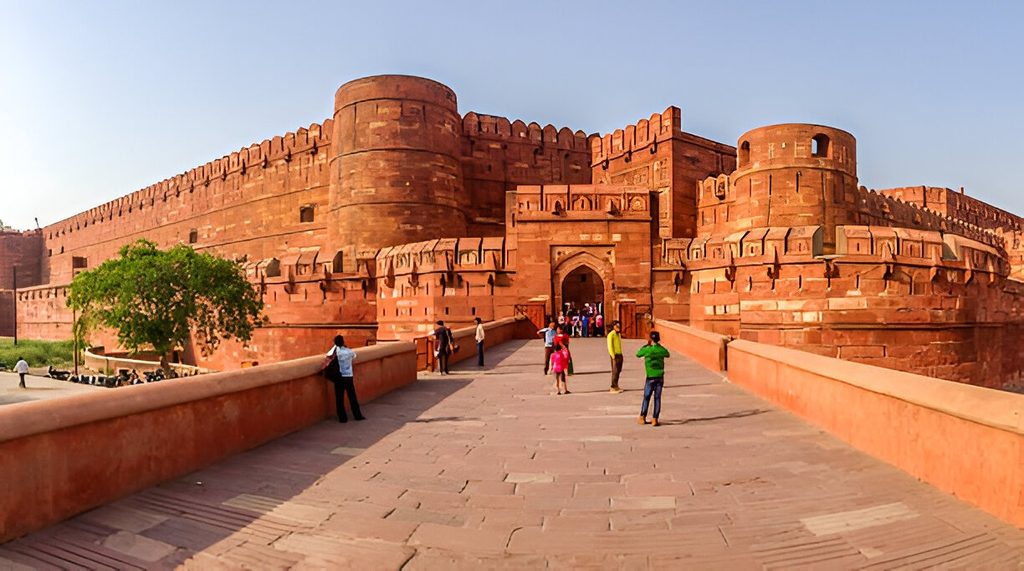
Agra Fort is one of the best places to understand the development of Mughal architecture. The fort contains buildings from several Mughal reigns. Each ruler added structures that reflected different needs and artistic preferences.
The fort served as a military stronghold, royal residence, and administrative center. Its walls and palace buildings reveal the changing priorities of Mughal rulers.
Akbar’s Red Sandstone Architecture
Akbar rebuilt Agra Fort mainly with red sandstone. The massive walls provided protection for the royal complex. The fort’s design focused on strength and security. Its large gates, courtyards, and thick walls created an imposing appearance. At the same time, the fort included elegant palace spaces. These areas combined practical planning with decorative details. Akbar’s buildings show the importance of regional craftsmanship. They also reflect the influence of Indian and Persian design traditions.
Jahangiri Mahal
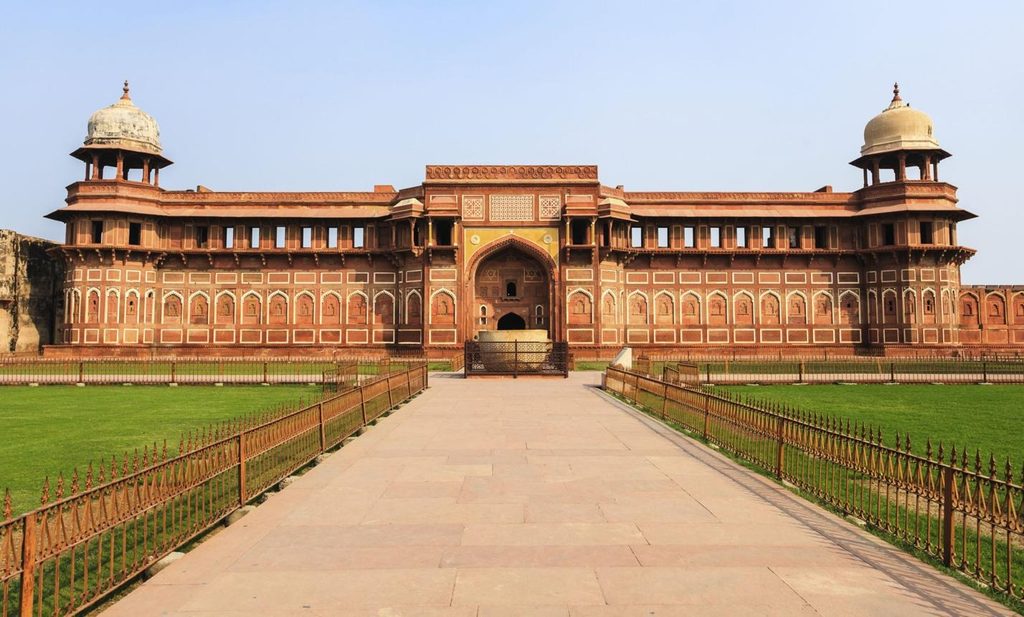
Jahangiri Mahal is one of the most notable buildings inside Agra Fort. Despite its name, the palace dates mainly from Akbar’s reign.
The building served as a residence for the royal household. Its design combines several architectural influences.
Look closely at its carved brackets, chhatris, and geometric screens. These features add character to the red sandstone structure.
The palace also helps visitors understand early Mughal architecture. Its design differs from the white marble buildings associated with Shah Jahan.
Shah Jahan’s Marble Additions
Shah Jahan added several elegant structures to Agra Fort. These buildings introduced a lighter and more decorative style.Important examples include:
- Khas Mahal
- Diwan-i-Khas
- Moti Masjid
- Anguri Bagh
White marble appears prominently in these buildings. Floral details, balanced layouts, and fine craftsmanship create a refined appearance. In contrast, Akbar’s earlier structures emphasize strength and scale. Shah Jahan’s additions focus more on beauty and symmetry. This contrast makes Agra Fort an important stop for architecture lovers. It also pairs naturally with the Taj Mahal during a one-day trip. Travelers can explore both monuments through a Taj Mahal Tour From Delhi By Car. This option allows visitors to discover Agra’s major landmarks in one journey.
Itmad-ud-Daulah: A Turning Point in Mughal Marble Architecture
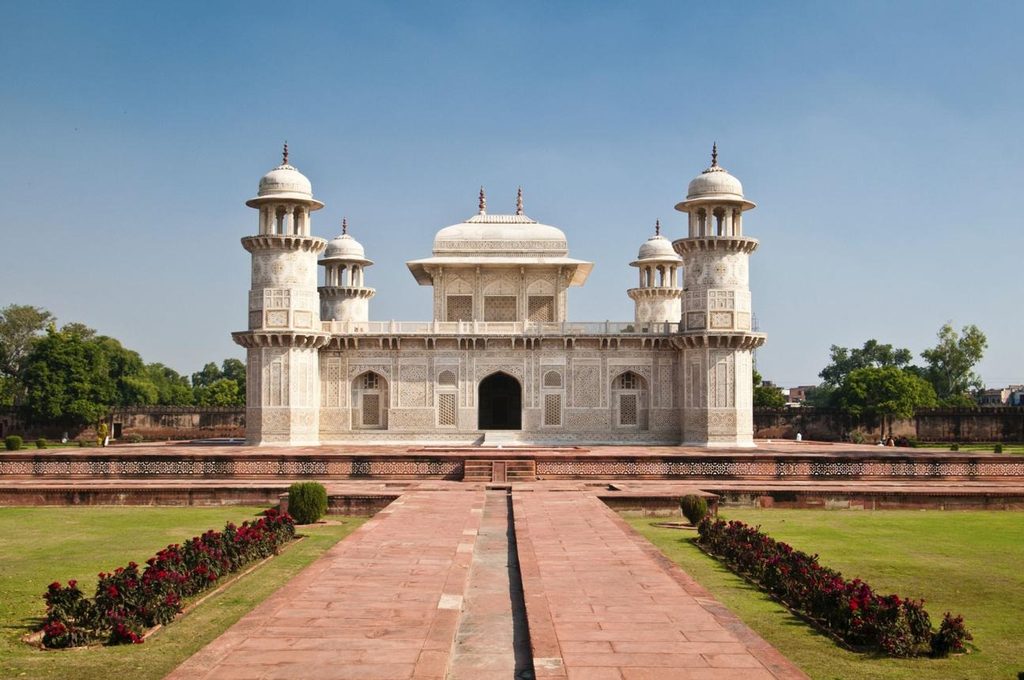
Itmad-ud-Daulah is one of Agra’s most beautiful smaller monuments. Many travelers call it the Baby Taj, although it has its own architectural identity.
The tomb was built in the 1620s for Mirza Ghiyas Beg. He served as an important official during Jahangir’s reign.
The monument uses white marble and detailed stone inlay. These features mark an important stage in the development of Mughal decorative architecture.
What Makes Itmad-ud-Daulah Special?
The tomb features delicate geometric and floral designs. Its marble surfaces create a calm and elegant appearance.The monument also contains finely carved jali screens. These screens allow light and air to pass through the stone. Visitors can observe several important design elements here:
- White marble construction
- Floral and geometric stone inlay
- Decorative jali screens
- Balanced architectural planning
- Persian-inspired artistic details
The monument shows how Mughal builders developed new decorative techniques. These techniques later appeared in more elaborate forms at the Taj Mahal. Unlike the massive Agra Fort, Itmad-ud-Daulah offers a quieter experience. Its smaller scale allows visitors to study the details more closely. Travelers who want extra time at smaller monuments can consider a Taj Mahal Tour By Luxury Car. A private tour may make it easier to explore several sites at a comfortable pace.
Mehtab Bagh and the Mughal Garden Tradition
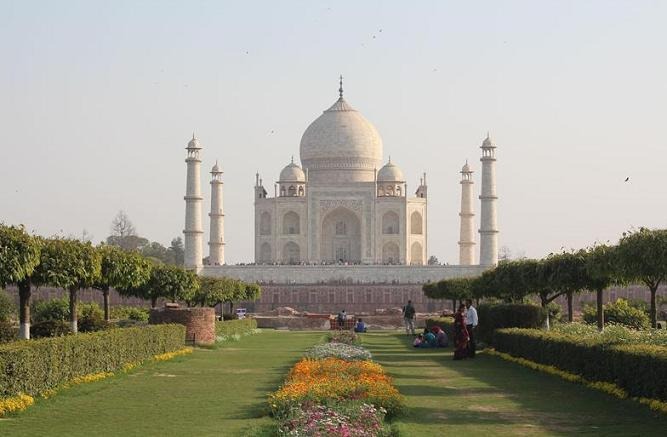
Mehtab Bagh is famous for its views of the Taj Mahal. However, the garden also represents an important part of Mughal architectural planning.
Mughal gardens often followed formal layouts. Designers used symmetry, water channels, pathways, and carefully arranged plants.
Mehtab Bagh reflects these planning traditions. Its location across the Yamuna creates a special relationship with the Taj Mahal.
The garden helps visitors understand how Mughal architects used landscapes. They did not treat gardens as separate from buildings. Instead, they designed them to complement the surrounding architecture.
Features to Notice at Mehtab Bagh
While exploring the garden, look for:
- Geometric garden layouts
- Formal pathways
- Open spaces and planting areas
- Views across the Yamuna
- The relationship between the garden and the Taj Mahal
The garden is also popular for photography. The light changes throughout the day, creating different views of the monument.
Some travelers prefer to visit Agra early in the morning. A Sunrise Taj Mahal And Agra Tour By Car can help them explore the city during the cooler hours.
Akbar’s Tomb at Sikandra: A Different Mughal Design
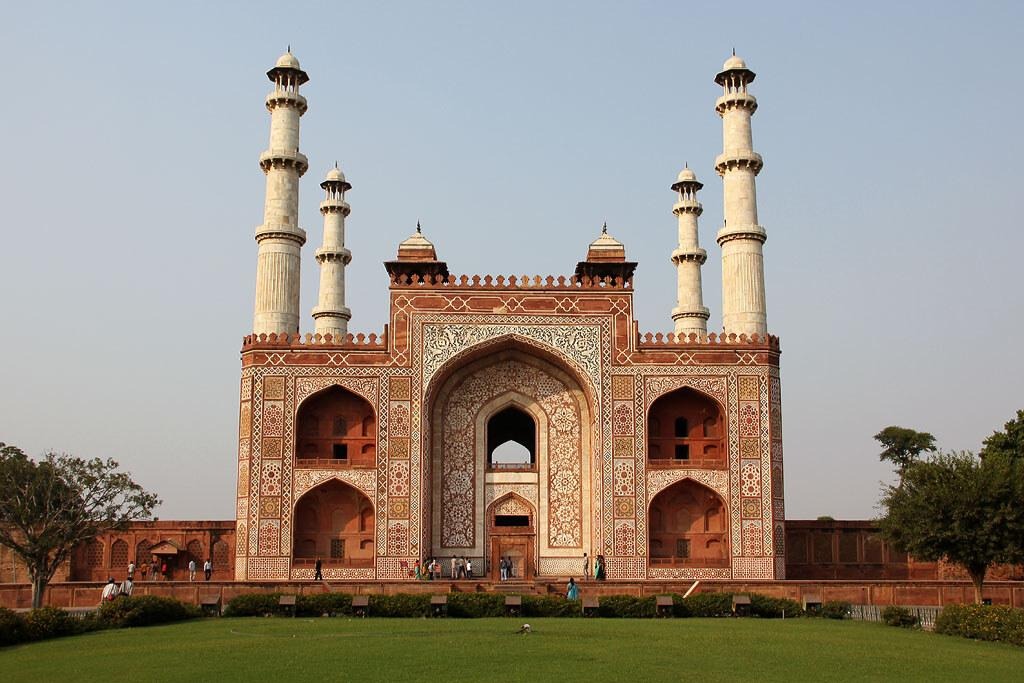
Akbar’s Tomb at Sikandra offers a different experience from Agra Fort and the Taj Mahal. The tomb complex combines red sandstone, marble, gardens, and decorative gateways.
The monument was completed during Jahangir’s reign after Akbar’s death. Its design reflects both earlier and later Mughal influences.
The complex features a large entrance gateway. Decorative inlay and calligraphy add detail to its exterior.
Inside, the tomb stands within a formal garden. The garden follows the traditional charbagh layout.
What Makes Sikandra Unique?
The tomb has a stepped design rather than the large central dome seen at the Taj Mahal. Its upper structure creates an open and distinctive appearance.
Several features make Sikandra interesting:
- Red sandstone and marble construction
- Monumental entrance gateways
- Geometric garden planning
- Decorative inlay work
- A multi-level tomb design
Sikandra helps explain the transition between different periods of Mughal architecture. It also offers a quieter setting away from Agra’s busiest attractions.
Chini Ka Rauza: Persian Influence in Agra
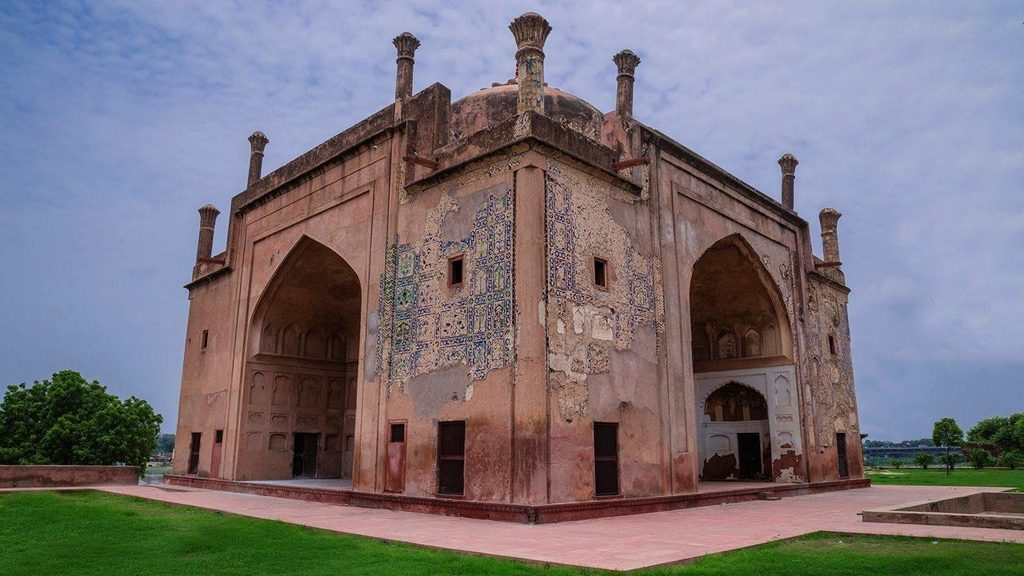
Chini Ka Rauza introduces visitors to another side of Mughal architecture. The monument is known for its colorful glazed tilework.
The tomb was built for Afzal Khan, a Persian scholar and official in Shah Jahan’s court. Its design reflects strong Persian and Central Asian influences.
Unlike the marble surfaces of Itmad-ud-Daulah, Chini Ka Rauza features decorated tilework. The surviving tiles display colorful geometric and floral patterns.
Architectural Features of Chini Ka Rauza
Visitors may notice:
- Glazed decorative tiles
- Persian-inspired designs
- Floral and geometric patterns
- A distinctive tomb structure
- Remains of colorful surface decoration
Much of the original tilework has faded over time. However, the remaining details still show the monument’s artistic importance.
Chini Ka Rauza reminds visitors that Mughal architecture included many different traditions. Persian artistic influences played an important role in Agra’s architectural history.
Mariam-uz-Zamani’s Tomb: An Overlooked Mughal Monument
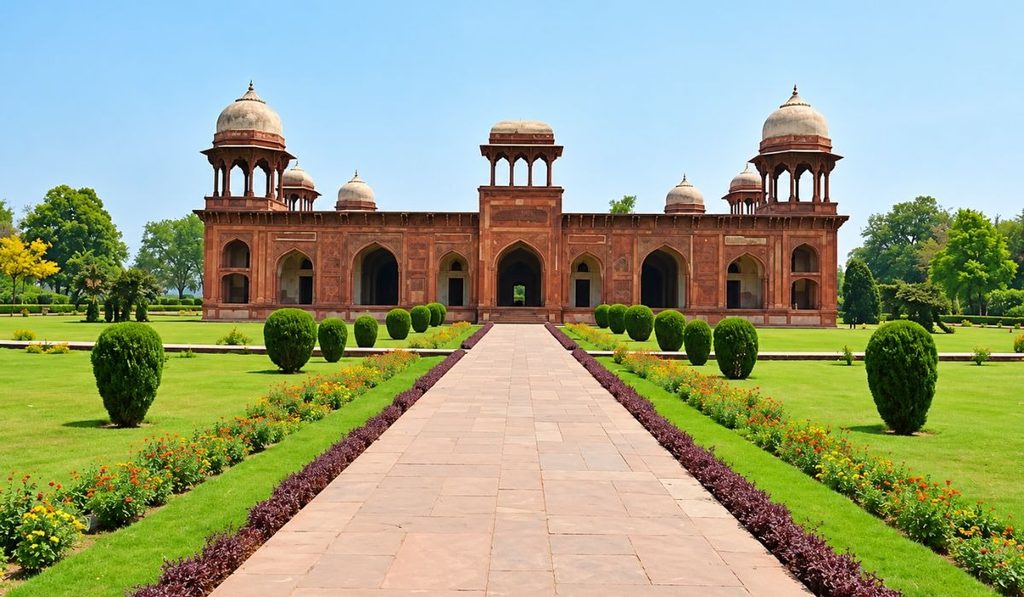
Mariam-uz-Zamani’s Tomb stands near Akbar’s Tomb in Sikandra. It is one of the lesser-visited Mughal monuments around Agra.
The tomb belongs to Mariam-uz-Zamani, who was Akbar’s wife and Jahangir’s mother. Its design reflects the architectural traditions of the earlier Mughal period.
Red sandstone forms an important part of the building. Carved decorative panels add detail to its exterior.
The monument has a more modest appearance than the Taj Mahal. Its quieter surroundings make it interesting for travelers who want to explore beyond the main attractions.
A visit here also adds historical depth to a trip through Sikandra. It shows that Agra’s Mughal heritage extends beyond its most famous landmarks.
How Mughal Architecture Changed from Akbar to Shah Jahan
Mughal architecture in Agra developed over several generations. Each ruler introduced different materials, designs, and decorative techniques.
The following table shows some broad architectural trends.
| Mughal ruler | Main architectural characteristics |
| Akbar | Red sandstone, strong fortifications, Indian and Persian influences |
| Jahangir | Greater decorative detail, garden design, and artistic refinement |
| Shah Jahan | White marble, symmetrical planning, and intricate stone inlay |
These categories describe general tendencies. They do not apply to every monument.
For example, Akbar’s Tomb was completed during Jahangir’s reign. Its design includes features from different architectural periods. Overall, Agra shows a gradual movement from massive sandstone structures toward more refined marble buildings. The city’s monuments make this development easy to observe.
Architectural Features to Look for in Agra
Once you understand the main styles, visiting Agra becomes more interesting. You can begin to recognize the details that connect different monuments.
1. Red Sandstone
Red sandstone appears prominently in Agra Fort. It also features in Jahangiri Mahal and parts of Akbar’s Tomb.
The material gives many early Mughal buildings a strong and imposing appearance.
2. White Marble
White marble became especially important during Shah Jahan’s reign. You can see it in the Khas Mahal, Moti Masjid, Itmad-ud-Daulah, and the Taj Mahal.
The material creates a lighter appearance. It also provides a smooth surface for decorative inlay.
3. Pietra Dura and Stone Inlay
Pietra dura involves placing colored stones into marble. Artisans use this technique to create floral and geometric designs.
Itmad-ud-Daulah is an excellent place to observe this type of decoration. Several interiors of Agra Fort also feature detailed inlay work.
4. Jali Screens
Jali screens are carved stone lattices. They allow light and air to enter while offering privacy.
These screens serve both practical and decorative purposes. You can find examples in Mughal palaces and tombs.
5. Arches and Domes
Arches appear throughout Mughal architecture. They often mark entrances or connect different spaces.
Domes are common in tombs and religious buildings. Domed pavilions also appear in palace architecture.
6. Symmetry and Geometry
Mughal builders often used balanced layouts. Symmetry appears in building facades, courtyards, and gardens.
These designs create a sense of order. They also reflect the influence of Islamic architectural traditions.
7. Gardens and Water Features
Formal gardens form an important part of Mughal design. Many gardens use straight pathways, water channels, and geometric planting beds.
These features connect architecture with the surrounding landscape. Mehtab Bagh is a useful place to observe this relationship.
Mughal Architecture in Agra vs. the Taj Mahal
The Taj Mahal is Agra’s most famous monument. However, other buildings help explain how its architectural style developed.
Agra Fort shows the work of several Mughal rulers. Its buildings combine military planning with royal design.
Itmad-ud-Daulah highlights the development of marble decoration. Its stone inlay provides useful context for the Taj Mahal.
Sikandra presents a different approach to tomb architecture. Its stepped structure and garden setting create a distinctive appearance.
Chini Ka Rauza adds another perspective. Its Persian-inspired tilework shows the variety of influences within Mughal design.
Together, these monuments provide a broader understanding of Agra’s architectural history. They help visitors appreciate the Taj Mahal within a much larger tradition.
How to Explore Agra’s Mughal Architecture in One Day
You can visit several major Mughal monuments in Agra in one day. However, your route will depend on opening hours, travel time, and the time you spend at each site.
Suggested One-Day Route
1 Taj Mahal : Start your day with a visit to Agra’s most famous monument.
2 Agra Fort : Explore the fort’s red sandstone walls and marble palace buildings.
3 Itmad-ud-Daulah : Spend time viewing the marble details and stone inlay.
4 Mehtab Bagh : Finish with garden views and a different perspective of the Taj Mahal.
Travelers with extra time can add Sikandra or Chini Ka Rauza. These sites offer more insight into Agra’s architectural diversity.
Visitors traveling from Delhi by train can explore a Taj Mahal Tour From Delhi by Superfast Train. Such a tour may include the Taj Mahal and Agra Fort, with additional sightseeing options.
Before planning your route, check the current opening hours and allow time for local travel.
Why You Should Look Beyond the Taj Mahal
The Taj Mahal remains the most famous monument in Agra. However, the city’s architectural identity extends far beyond it.
Agra Fort reveals the changing priorities of Mughal rulers. Itmad-ud-Daulah showcases delicate marble decoration. Sikandra presents a different style of tomb design.
Meanwhile, Chini Ka Rauza highlights Persian artistic influence. Mehtab Bagh shows how gardens became part of Mughal architectural planning.
Together, these sites tell a much richer story. They show how materials, craftsmanship, and design changed over time.
On your next visit, look closely at the buildings around you. Notice their stone, symmetry, arches, screens, and gardens. These details connect Agra’s monuments and reveal the development of Mughal architecture.
Frequently Asked Questions About Mughal Architecture in Agra
What are the main Mughal monuments in Agra besides the Taj Mahal?
The main sites include Agra Fort, Itmad-ud-Daulah, Akbar’s Tomb at Sikandra, Chini Ka Rauza, Mehtab Bagh, and Mariam-uz-Zamani’s Tomb. Each monument reflects a different part of Agra’s architectural history.
How did Mughal architecture develop in Agra?
Mughal architecture in Agra changed over several generations. Akbar favored red sandstone and strong fortifications. Jahangir introduced greater decorative refinement. Shah Jahan later emphasized white marble, symmetry, and stone inlay.
What is the architectural significance of Agra Fort?
Agra Fort contains buildings from different Mughal reigns. Its structures show how the city’s architecture changed over time. Visitors can see both massive sandstone fortifications and elegant marble buildings.
Why is Itmad-ud-Daulah important in Mughal architecture?
Itmad-ud-Daulah is known for its white marble construction and detailed stone inlay. The monument represents an important stage in the development of Mughal decorative architecture.
What materials were commonly used in Mughal architecture in Agra?
Red sandstone was important during the earlier Mughal period. White marble became more prominent during Shah Jahan’s reign. Other features include stone inlay, carved screens, glazed tiles, and formal gardens.
Can you see several Mughal monuments in Agra in one day?
Yes, visitors can explore several major sites in one day with careful planning. A typical route may include the Taj Mahal, Agra Fort, Itmad-ud-Daulah, and Mehtab Bagh. Travelers with more time can add Sikandra or Chini Ka Rauza.
Which Agra monuments show the evolution of Mughal architecture?
Agra Fort, Sikandra, and Itmad-ud-Daulah provide useful examples of architectural change. Agra Fort shows different building phases. Sikandra presents a distinctive tomb design. Itmad-ud-Daulah highlights the development of marble decoration.
Final Thoughts
Mughal architecture in Agra offers much more than the Taj Mahal. The city’s forts, tombs, gardens, and palaces reveal centuries of artistic development. From Akbar’s red sandstone buildings to Shah Jahan’s marble craftsmanship, each monument tells a different story. Explore these landmarks during your Agra trip. You will discover a deeper connection between the city’s history, architecture, and culture.

Comments