
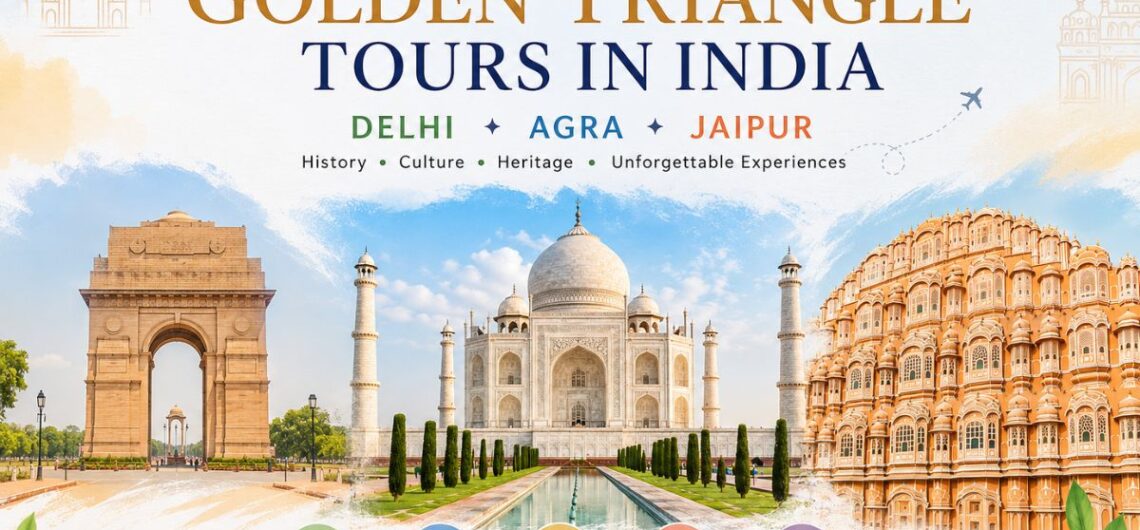
India’s Golden Triangle is one of the country’s most popular travel circuits, connecting three historically and culturally significant cities: Delhi, Agra, and Jaipur. Together, these destinations offer an introduction to India’s diverse heritage, from Mughal monuments and grand forts to colorful markets, traditional cuisine, and centuries-old neighborhoods. For travelers planning their first journey through North India, this Golden Triangle Travel Guide explains the route, major attractions, ideal trip duration, best time to visit, transportation options, accommodation choices, and practical tips to help you plan your journey.
Whether you have only a few days or want to combine the route with destinations such as Ranthambore, Varanasi, or Amritsar, understanding how the circuit works can help you create a more comfortable and rewarding itinerary.
What Is the Golden Triangle of India?
The Golden Triangle is a popular tourist circuit formed by three cities:
- Delhi
- Agra
- Jaipur
When these destinations are connected on a map, the route forms a roughly triangular shape, which explains the name.
Each city offers a distinctly different experience.
Delhi introduces visitors to India’s layered history, combining Mughal-era monuments, colonial architecture, historic markets, religious sites, and modern neighborhoods.
Agra is internationally known as the home of the Taj Mahal but also preserves several important examples of Mughal architecture.
Jaipur, the capital of Rajasthan, is famous for royal palaces, hilltop forts, colorful bazaars, and Rajput heritage.
Together, the three cities provide travelers with a broad introduction to the history, architecture, culture, and traditions of northern India.
Why Is the Golden Triangle So Popular?
The Golden Triangle is particularly popular among first-time visitors because it combines several of India’s most recognizable experiences within a relatively compact route.
Travelers can explore centuries-old monuments in Delhi, watch the morning light change the appearance of the Taj Mahal, walk through Mughal forts in Agra, and discover the royal architecture of Jaipur—all within one journey.
Another advantage is connectivity. Delhi, Agra, and Jaipur are linked by major highways and railway routes, making the circuit relatively straightforward to organize.
The route can also be customized according to available time. A short itinerary can cover the main landmarks, while a longer journey provides opportunities for slower sightseeing and additional cultural experiences.
Golden Triangle Route: Delhi, Agra and Jaipur
A typical Golden Triangle itinerary follows this route:
Delhi → Agra → Jaipur → Delhi
The journey usually begins in Delhi because the city is a major international gateway with excellent flight connections.
From Delhi, travelers continue to Agra to visit the Taj Mahal and other Mughal landmarks. The next stage leads to Jaipur, often with an optional stop at Fatehpur Sikri along the way.
After exploring Jaipur, travelers return to Delhi or continue to another destination in India.
The approximate road distances are:
- Delhi to Agra: around 230 km
- Agra to Jaipur: around 240 km
- Jaipur to Delhi: around 280 km
Actual travel times depend on traffic, weather, road conditions, and stops along the route.
Delhi: Where the Golden Triangle Journey Begins
Delhi is much more than a starting point. As one of India’s most historically layered cities, it deserves enough time to explore both its old and modern sides.
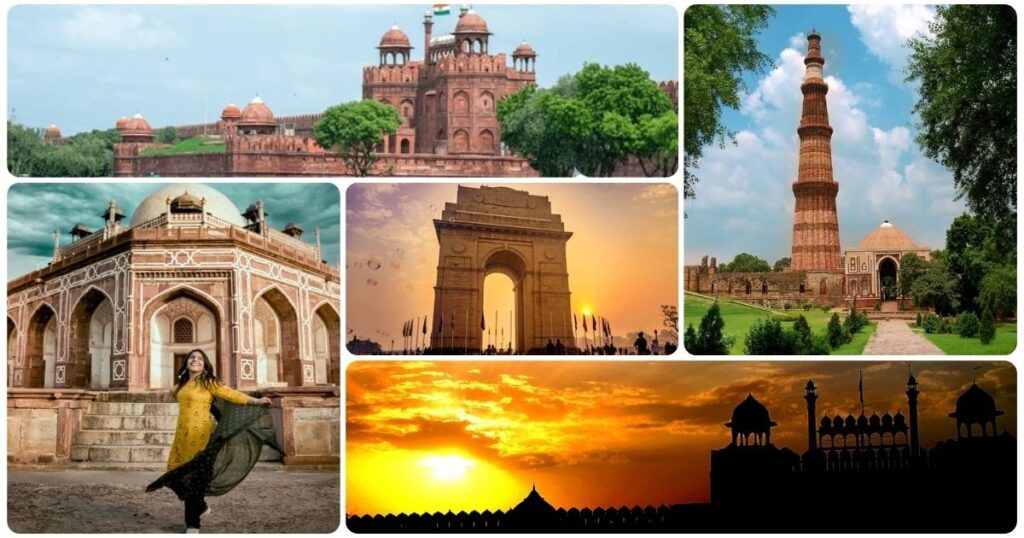
The city is broadly experienced through Old Delhi and New Delhi, each offering a different atmosphere.
Red Fort
The Red Fort is one of Delhi’s most recognizable Mughal landmarks. Built during the reign of Emperor Shah Jahan, the vast complex reflects the architectural ambitions of the Mughal Empire.
Its massive red sandstone walls and historic structures provide valuable insight into India’s imperial history.
Jama Masjid
Located in Old Delhi, Jama Masjid is among India’s largest historic mosques. Its grand courtyard and impressive Mughal architecture make it an important stop while exploring the old city.
Chandni Chowk
For a completely different experience, explore the narrow streets of Chandni Chowk.
The historic market district is known for traditional shops, street food, spices, textiles, jewelry, and religious landmarks. A cycle-rickshaw ride through the area can provide a memorable introduction to the energy of Old Delhi.
India Gate
India Gate is one of New Delhi’s best-known landmarks. The war memorial stands along the ceremonial heart of the capital and is surrounded by broad avenues and landscaped areas.
Humayun’s Tomb
Often considered an architectural predecessor to the Taj Mahal, Humayun’s Tomb is an important example of early Mughal garden-tomb architecture.
Its symmetrical layout, red sandstone construction, and Persian-inspired design make it one of Delhi’s most significant heritage sites.
Qutub Minar
The Qutub Minar complex contains monuments representing some of Delhi’s earliest Islamic architecture. The soaring minaret is one of the city’s most recognizable structures and forms part of a UNESCO World Heritage Site.
How Much Time Should You Spend in Delhi?
Ideally, allow at least one full day for major attractions. Two days provide a more relaxed experience and allow time for markets, food experiences, museums, and lesser-known neighborhoods.
Agra: Home of the Taj Mahal
Agra is the second major destination on the Golden Triangle route.
Although most visitors come specifically to see the Taj Mahal, the city played an important role in Mughal history and contains several significant monuments.
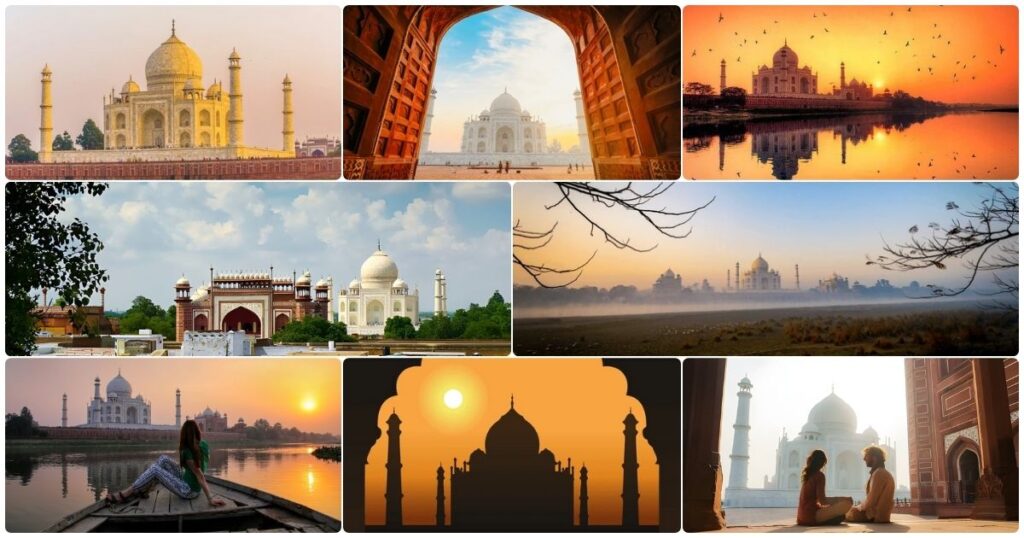
Taj Mahal
The Taj Mahal is undoubtedly the highlight of most Golden Triangle journeys.
Built by Mughal Emperor Shah Jahan in memory of his wife Mumtaz Mahal, the white-marble mausoleum is admired for its symmetry, craftsmanship, calligraphy, gardens, and intricate stone inlay work.
Early morning is often one of the most rewarding times to visit. Temperatures are generally more comfortable, crowds may be lighter than later in the day, and the softer light creates excellent conditions for viewing and photography.
Travelers should remember that the Taj Mahal is normally closed to general visitors on Fridays, so itinerary dates should be planned accordingly.
Agra Fort
Agra Fort is another major Mughal landmark and should not be overlooked.
The fortified complex served as an important imperial residence and contains palaces, courtyards, halls, and defensive structures. Certain areas also offer distant views toward the Taj Mahal.
Itmad-ud-Daulah
Sometimes called the “Baby Taj,” the Tomb of Itmad-ud-Daulah is known for its delicate marble work and intricate decoration.
Although smaller than the Taj Mahal, it provides valuable insight into the development of Mughal architecture.
Mehtab Bagh
Located across the Yamuna River from the Taj Mahal, Mehtab Bagh is known for its views of the monument.
It can be particularly attractive during the late afternoon and around sunset.
How Much Time Should You Spend in Agra?
One full day is sufficient for the major attractions if your itinerary is carefully planned. Staying overnight, however, makes it easier to experience the Taj Mahal early in the morning without traveling from another city before your visit.
Jaipur: Royal Heritage and Rajasthan Culture
Jaipur adds a distinctly Rajput character to the Golden Triangle.
Known as the Pink City, Rajasthan’s capital is famous for grand forts, royal palaces, historic observatories, handicrafts, jewelry, textiles, and traditional markets.
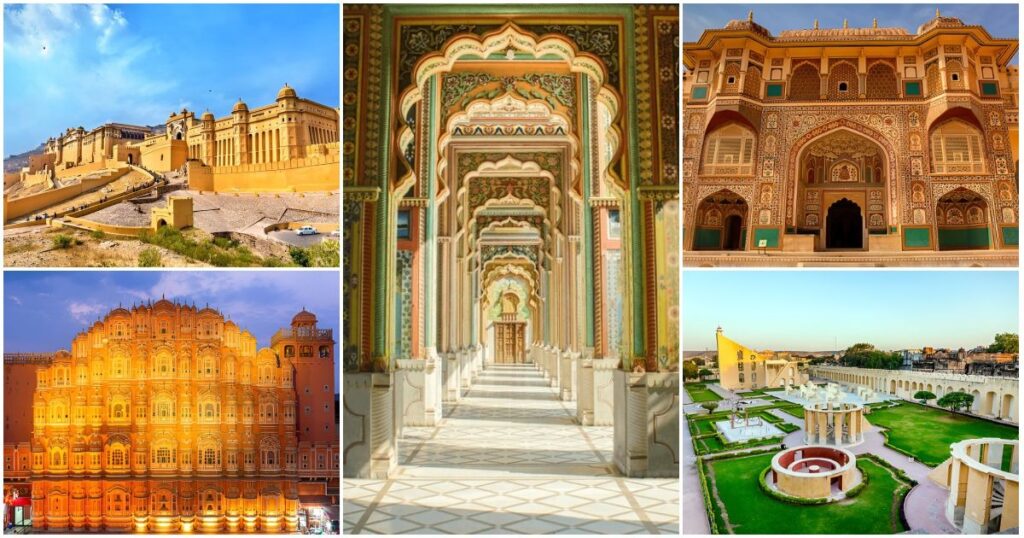
Amber Fort
Located outside the central city, Amber Fort is one of Jaipur’s most impressive attractions.
The large hilltop complex includes courtyards, halls, gateways, and decorated chambers that reflect the wealth and architectural traditions of Rajasthan’s former rulers.
Allow enough time to explore the fort rather than treating it as a quick photo stop.
City Palace
Located in the heart of Jaipur, the City Palace complex combines Rajput and Mughal architectural influences.
Parts of the complex function as museums displaying royal costumes, weapons, artwork, and historical objects.
Hawa Mahal
The Hawa Mahal is one of Jaipur’s most photographed landmarks.
Its distinctive façade contains hundreds of small windows and openings designed to allow air to circulate through the structure. Historically, these openings also enabled royal women to observe street life while maintaining privacy.
Jantar Mantar
Jantar Mantar is a remarkable collection of large astronomical instruments and a UNESCO World Heritage Site.
A knowledgeable guide can make the experience more meaningful by explaining how the instruments were designed to measure time and observe astronomical movements.
Jaipur’s Local Markets
Jaipur is also an excellent destination for travelers interested in shopping and traditional crafts.
Markets are known for items such as:
- Block-printed textiles
- Blue pottery
- Gemstones and jewelry
- Traditional clothing
- Handcrafted souvenirs
- Leather products
Compare quality and prices before making expensive purchases, particularly when buying jewelry or gemstones.
How Many Days Do You Need for the Golden Triangle?
The ideal duration depends on your travel pace and interests.
3 Days: Best for Travelers with Limited Time
A three-day itinerary focuses primarily on the highlights of Delhi, Agra, and Jaipur.
It can work for travelers with a tight schedule, but sightseeing days are usually busy and travel between cities takes up a significant amount of time.
A 3 Days Golden Triangle Tour may suit visitors who want a quick introduction to the route and are comfortable with a faster pace.
5 Days: A More Balanced Experience
Five days provide a better balance between sightseeing and travel.
This duration allows visitors to spend more meaningful time at major attractions while avoiding an excessively rushed schedule.
A 5 Days Golden Triangle Tour is often suitable for first-time visitors who want to experience the three cities at a more comfortable pace.
6 to 7 Days: Best for Slow Exploration
Travelers who prefer slower journeys can spend six or seven days on the circuit.
The extra time can be used for:
- Food experiences
- Local markets
- Heritage walks
- Museums
- Cultural activities
- Photography
- Lesser-known attractions
Longer itineraries are particularly useful for families and travelers who prefer not to spend every day following a tightly packed sightseeing schedule.
Best Time to Visit India’s Golden Triangle
The most comfortable season for most travelers is generally from October to March.
October to November
These months usually offer pleasant sightseeing conditions after the monsoon period. They are popular for outdoor exploration.
December to January
Winter brings cooler temperatures, especially during mornings and evenings.
However, northern India can experience fog during this period, which may occasionally affect road, rail, and air travel.
February to March
The weather is often comfortable, making these months another popular period for exploring the circuit.
April to June
Temperatures can become extremely high, particularly during the afternoon.
Travel is still possible, but sightseeing should ideally be planned for mornings and later afternoons.
July to September
The monsoon season can bring rain and humidity. On the positive side, landscapes may appear greener and some destinations can be less crowded than during peak winter months.
How to Travel Around the Golden Triangle
Transportation can significantly influence the comfort and pace of your journey.
By Private Car
A private car is one of the most flexible ways to complete the circuit.
Advantages include:
- Door-to-door transportation
- Flexible departure times
- Easier luggage management
- Opportunities for stops between cities
- Greater itinerary flexibility
This option is particularly convenient for families, couples, and small groups.
By Train
India’s railway network connects Delhi, Agra, and Jaipur.
Train travel can be efficient, particularly between Delhi and Agra, but travelers need to coordinate station transfers, luggage, local transportation, and sightseeing separately.
Advance reservations are advisable on popular routes.
Combination of Car and Train
Some travelers combine different transportation methods.
For example, a fast train may be used between Delhi and Agra, while a private vehicle is arranged for other parts of the journey.
The best choice depends on your schedule, budget, luggage, and preferred level of flexibility.
What Does a Typical Golden Triangle Itinerary Look Like?
A five-day itinerary might look like this:
Day 1: Delhi
Explore major attractions in Old and New Delhi.
Day 2: Delhi to Agra
Travel to Agra and visit Agra Fort and other local attractions.
Day 3: Agra to Jaipur
Visit the Taj Mahal early in the morning before traveling toward Jaipur. Stop at Fatehpur Sikri if your schedule allows.
Day 4: Jaipur
Explore Amber Fort, City Palace, Jantar Mantar, Hawa Mahal, and local markets.
Day 5: Jaipur to Delhi
Complete any remaining sightseeing before returning to Delhi.
This is only a sample. Your itinerary should be adjusted according to arrival times, departure schedules, interests, and travel pace.
Popular Golden Triangle Extensions
One of the biggest advantages of this route is the ability to combine it with other destinations.
Golden Triangle with Ranthambore
Wildlife enthusiasts can add Ranthambore National Park to their journey.
A Golden Triangle Tour with Ranthambore combines India’s historic cities with the opportunity to experience a wildlife safari. Ranthambore is particularly known for its tiger population, although wildlife sightings can never be guaranteed.
This extension works well for travelers interested in combining culture, architecture, and nature.
Golden Triangle with Varanasi
Varanasi provides a completely different cultural and spiritual experience.
A Golden Triangle Tour with Varanasi can include experiences along the Ganges, historic temples, narrow old-city lanes, and traditional ceremonies.
The combination is particularly popular among travelers seeking a deeper introduction to India’s religious traditions and living heritage.
Golden Triangle with Amritsar
Travelers interested in Sikh heritage can extend their journey to Amritsar.
A Golden Triangle Tour With Amritsar allows visitors to experience the Golden Temple and learn more about the history and traditions associated with one of India’s most important spiritual destinations.
Golden Triangle with Prayagraj
Prayagraj is known for the Triveni Sangam, the traditional confluence of the Ganges, Yamuna, and the mythical Saraswati rivers.
A Golden Triangle Tour with Prayagraj can appeal to travelers interested in India’s spiritual geography, pilgrimage traditions, and cultural heritage.
Where Should You Stay?
Accommodation is available across a wide range of budgets in all three cities.
Budget Hotels
Suitable for travelers who prioritize affordability and basic comfort.
Mid-Range Hotels
Often provide a good balance of comfort, facilities, and location.
Luxury Hotels
Delhi, Agra, and Jaipur all offer high-end hotels, including restored heritage properties and internationally recognized luxury brands.
When choosing accommodation, consider location as carefully as price. Staying far from major sightseeing areas may increase daily travel time.
What Should You Pack?
Packing requirements vary by season, but useful items generally include:
- Comfortable walking shoes
- Lightweight clothing
- Sunglasses
- Sunscreen
- Reusable water bottle
- Government-issued identification
- Power adapter
- Light jacket during winter
- Personal medication
During winter, mornings in Delhi and Agra can be considerably cooler than daytime temperatures.
Practical Golden Triangle Travel Tips
Start Sightseeing Early
Early starts can help you avoid some of the largest crowds and hotter afternoon temperatures.
Keep Travel Times Realistic
Distances may look manageable on a map, but city traffic can increase journey times.
Avoid planning too many major attractions on transfer days.
Check Monument Closing Days
Some attractions have weekly closure days. The Taj Mahal, for example, is generally closed to tourists on Fridays.
Always verify current schedules before finalizing your itinerary.
Book Important Services in Advance
During peak travel periods, hotels, trains, guides, and popular experiences can fill quickly.
Advance planning is especially important if your travel dates coincide with major festivals or public holidays.
Choose Licensed and Experienced Guides
A knowledgeable guide can provide historical context that is difficult to gain from simply walking through a monument.
Before booking, confirm what guide services are included.
Respect Local Customs
India is culturally diverse, and expectations may vary between monuments and religious sites.
Dress respectfully when visiting places of worship and follow local instructions regarding footwear and photography.
Common Mistakes to Avoid
One common mistake is trying to include too many destinations in too little time. A packed itinerary may allow you to technically visit more places, but it can reduce the quality of the overall experience.
Another mistake is focusing only on famous photo spots. Delhi, Agra, and Jaipur become more meaningful when travelers also experience local neighborhoods, markets, cuisine, craftsmanship, and everyday culture.
Travelers should also avoid choosing a tour solely based on the lowest price. Check transportation standards, hotel categories, guide services, entry fees, and other inclusions before comparing packages.
Is the Golden Triangle Worth Visiting?
For first-time visitors seeking an introduction to North India, the Golden Triangle remains one of the most practical and culturally diverse routes.
Within a relatively short journey, travelers can experience Mughal history in Delhi and Agra, the architectural beauty of the Taj Mahal, and the royal heritage of Rajasthan in Jaipur.
The circuit is also highly adaptable. It can be completed as a short highlights trip or expanded into a longer journey incorporating wildlife, spirituality, food, photography, or regional culture.
FAQ – Golden Triangle Travel Guide
What information does a Golden Triangle Travel Guide include?
A Golden Triangle Travel Guide typically covers the Delhi–Agra–Jaipur route, major attractions, recommended trip duration, transportation options, the best time to visit, accommodation choices, and practical travel tips.
How many days are enough for a Golden Triangle trip?
Three days can cover the main highlights at a fast pace, while five to seven days generally provide a more comfortable experience.
Which city should I visit first?
Most travelers begin in Delhi because it is a major international transportation hub. A typical route continues from Delhi to Agra, then Jaipur, before returning to Delhi.
What is the best month for a Golden Triangle trip?
The period from October to March generally offers the most comfortable weather, although each month has different advantages and potential drawbacks.
Is the Golden Triangle suitable for first-time visitors to India?
Yes. The route is popular among first-time visitors because it combines several major historical and cultural attractions with relatively convenient transportation connections.
Is three days enough for Delhi, Agra, and Jaipur?
It is possible to see selected highlights in three days, but the itinerary will be fast-paced. Travelers seeking a more relaxed experience should consider five or more days.
Can I travel around the Golden Triangle by train?
Yes. Railway services connect the major cities, although travelers will still need local transportation for sightseeing and station transfers.
Is a private car better for a Golden Triangle trip?
A private car provides greater flexibility and convenient door-to-door transportation. Whether it is the best option depends on your budget, group size, and travel preferences.
Can I add Ranthambore to the Golden Triangle?
Yes. Ranthambore is one of the most popular extensions and is suitable for travelers interested in combining cultural sightseeing with a wildlife safari.
What other destinations can be added to the Golden Triangle?
Popular extensions include Ranthambore, Varanasi, Amritsar, Prayagraj, Udaipur, Jodhpur, and other destinations depending on the length and focus of the trip.
Final Thoughts
Planning a journey through Delhi, Agra, and Jaipur requires more than simply choosing the number of days. The best itinerary should consider your interests, travel pace, preferred transportation, season, and the experiences you value most.
This Golden Triangle Travel Guide provides a starting point for understanding the route and deciding how to structure your journey. Travelers with limited time may prefer a compact three-day itinerary, while five or more days allow for a more balanced exploration.
If you have additional time, extending the route to destinations such as Ranthambore, Varanasi, Amritsar, or Prayagraj can add another dimension to the journey.
Whatever itinerary you choose, allowing enough time to experience each destination—rather than simply checking landmarks off a list—can make your Golden Triangle journey far more memorable.

Comments