

Many travellers remember their first sight of the Taj Mahal long after the trip ends. The white marble mausoleum in Agra rewards a little preparation, because the visit also involves ticket checks, security screening, a fair amount of walking and a few rules that can surprise newcomers. This Taj Mahal visiting guide for first-time visitors explains what to know before you arrive: how entry works, what to carry and leave behind, what to wear, where photography is allowed and how much time to plan. Entry rules and ticket arrangements change, so wherever a detail is time-sensitive, this guide points you to official sources instead of guessing.
What Should First-Time Visitors Know Before Visiting the Taj Mahal?
The Taj Mahal stands on the bank of the Yamuna River in Agra, Uttar Pradesh. Emperor Shah Jahan built it in the 17th century as a tomb for his wife Mumtaz Mahal, and it has been a UNESCO World Heritage Site since 1983.
For a first-time visit, three points matter most:
- It is a complex, not a single building. You pass through security and a monumental entrance gate, then walk through gardens before reaching the main mausoleum. The official Taj Mahal website lists entry to the main mausoleum as an additional, optional ticket, so the garden complex and the inner mausoleum are treated separately.
- Days and hours matter. The official Taj Mahal visiting hours the monument opens 30 minutes before sunrise and closes 30 minutes before sunset on normal operating days, and is closed to general visitors on Fridays. Sunrise and sunset shift through the year, so check the current schedule before fixing your dates.
- Time disappears at the entrance. Security screening and the walk from the gate to the mausoleum take longer than most people expect. Follow official signs and staff instructions throughout.
Some of this Taj Mahal visiting guide for first-time visitors is stable (the layout, the Friday closure) and some changes (prices, gate use, restricted items), so verify the changeable parts close to your visit date.
How to Prepare for Your First Taj Mahal Visit
A little planning the day before removes most of the stress on the day itself.
- Check tickets and keep photo ID handy. Review the official ticketing channels and current entry arrangements (see the ticket section below). Staff or your booking may ask you to confirm your visitor category, since fees differ for Indian and foreign visitors.
- Choose comfortable footwear. You will walk long paths and stone surfaces, and may be asked to cover or remove shoes near the marble.
- Carry only permitted essentials and check the forecast. A small bag saves time at security (see the items section), and summer heat, monsoon rain or cool, hazy winter mornings all call for different plans.
- Leave time to reach the monument. The official visitor information says polluting vehicles are not allowed within 500 metres of the Taj Mahal. It lists parking at Shilpgram for the east gate and Amrood ka Teela for the west gate, with battery buses and golf carts to the gate.
Comparing Taj Mahal tour options from Delhi? See the private tour packages from India Beyond Travel.
View Taj Mahal Tour PackagesEntry procedures, ticket prices and visitor policies can change. Rely on official sources rather than older travel blogs once your date is close.
Taj Mahal Entry Gates and the Arrival Experience
The Taj Mahal has more than one visitor gate. At the time of checking, the official site listed ticket counters at the Western Gate (near Saheli Burj) and the Eastern Gate, and described the Southern Gate as exit-only “at present”. It also notes separate queues for foreign and domestic visitors, with signs directing you.
Gate arrangements can change, so confirm which gate suits your ticket and where your hotel or transport will drop you. Do not assume one gate is always the quickest, because queues depend on the day, the season and the crowd.
What to expect on arrival:
- Security screening. Bags are checked and queues are possible, especially on weekends, holidays and peak-season mornings.
- Signs and staff. Follow the directions for your ticket type, and keep your ticket (or booking QR code) and ID easy to reach.
- After you enter. You walk through the monumental entrance gate and into the gardens. The official site also lists a Taj Museum inside the complex, open 10 am to 5 pm with free entry, which is worth confirming on the day.
Taj Mahal Ticket Booking and Entry Requirements
Booking through official channels is the safest approach. In April 2026, the Archaeological Survey of India’s Agra Circle warned tourists about a fake booking website, as reported by ETV Bharat, and said tickets bought there would not grant entry. It named asi.payumoney.com and asi.paygov.org.in as official sites, and also pointed to QR codes at the entry gates and ticket windows. Check the spelling of any web address carefully, because lookalike sites are the usual trap.
Points to check before you pay:
- Your ticket category. Fees depend on visitor category (Indian citizens and OCI cardholders, SAARC and BIMSTEC nationals, other foreign nationals), so choose the one that applies. Read current prices on the official portal rather than a blog.
- The main mausoleum. The official site treats it as an additional optional ticket, so decide before you book whether you want to go inside.
- Children. The official visiting hours page notes no entry fee for children under 15. Confirm this when you book.
- Booking conditions. Read the date, entry slot and any change or refund terms shown at checkout.
- Tour bookings. If you book through an operator, ask whether monument tickets are included so you do not buy them twice.
What to Wear When Visiting the Taj Mahal
The official visitor information does not set out a dress code, so treat the suggestions below as practical advice, not formal rules.
- Weather-appropriate clothing. Light, breathable cotton suits hot weather, and much of the visit is outdoors. Add a hat, sunglasses and sunscreen from late spring through early autumn.
- Light layers. Cooler winter mornings call for a jacket or shawl you can remove later. In the monsoon, a light rain jacket is easier than an umbrella in a crowd.
- Walking-friendly footwear. Comfortable shoes or sandals that are easy to slip off simplify any shoe-cover stop, and polished marble can be slippery when wet. Clean socks are a sensible extra.
- Respectful dress. The complex includes a tomb and a mosque, so covered shoulders and knees are a courteous choice. This is a courtesy, not a rule listed on the official pages.
What Items Are Allowed and Prohibited Inside the Taj Mahal?
Security restrictions are the most likely thing to change between a blog post and your visit, so check the latest list on the official do’s and don’ts page before you pack.
The sensible approach is to travel light. A small bag with your ticket, ID, wallet and phone is easier to screen than a backpack, and the official page asks visitors to avoid big bags and books because they can lengthen security checks. At the time of checking, it named items such as drones, tripods, tobacco and smoking items, liquor, food, knives, headphones, mobile chargers and electrical goods other than cameras as prohibited, and said eating and smoking are not allowed inside.
A prohibited item can mean returning to your vehicle or hotel, which costs time in a queue, so leave anything doubtful behind.
What Can You See Inside the Taj Mahal Complex?
Knowing what you are looking at makes the walk far more rewarding.
The Entrance Gate and Gardens
The monumental entrance gate frames your first view of the mausoleum. Beyond it, the gardens follow the Mughal charbagh idea of four quadrants divided by water channels. The central channel and reflecting pool lead the eye straight to the tomb and, on calm days, mirror it.
The Main Mausoleum
The main mausoleum is the white-marble building on the raised platform, with a central dome and four minarets at the corners. Its symmetry is deliberate, and the minarets are often explained as leaning slightly outward so they would fall away from the tomb. Look closely at the surfaces: decorative marble inlay with coloured stones, and calligraphy framing the arches, are among the finest details. Inside, the cenotaphs of Mumtaz Mahal and Shah Jahan sit in the central chamber, and photography is prohibited there.
Beyond the Mausoleum
The red sandstone mosque on one side and its matching building on the other keep the complex balanced. These, the gates, the gardens and the museum belong to the wider complex, while only the central white-marble building is the main mausoleum that the extra ticket covers. The whole ensemble sits in a wider Mughal setting along the Yamuna.
Photography Rules and Tips for First-Time Visitors
Check the latest photography restrictions before you go. The official visitor information says photography is prohibited inside the main mausoleum, that drones are strictly prohibited inside and around the Taj Mahal, and lists tripods among prohibited items. Professional or unusual equipment may need separate permission, so do not assume every camera setup is allowed.
Practical tips:
- Follow staff instructions about restricted areas, and put the camera away inside the mausoleum.
- Be considerate. Avoid stopping in the entrance gate or on narrow paths, and wait your turn at popular viewpoints.
- Think about the light. Early light is softer and the air is cooler. Travellers interested in an early-morning visit can explore the Sunrise Taj Mahal and Agra tour by car.
- Look up from the screen. Spend a few minutes taking in the inlay, the proportions and the gardens without a lens in the way.
How Much Time Should You Allow for a Taj Mahal Visit?
There is no official visit duration. The time you need depends on your interests, queues, security screening and crowd levels. Many local operators suggest around two to three hours for a relaxed visit covering the gardens and the mausoleum, with less for a quick look and more for photography. Treat that as a planning estimate, not a promise.
Entry and security vary most from day to day, followed by the garden walk, the exterior architecture, the permitted interior areas (an extra queue for the main mausoleum) and photography and rest breaks.
The official site lists ticket counters closing earlier than the monument itself, so do not leave your visit to the last hour.
Visitors who value flexibility sometimes choose a private luxury car tour to the Taj Mahal, which lets a group set its own pace for the journey and the day. A private vehicle does not change how entry, security or queues work at the monument itself.
Practical Tips for Visiting the Taj Mahal with Children or Older Travellers
A comfortable visit starts with realistic pacing.
- Allow extra walking and rest time. Shaded breaks matter more than a tight schedule.
- Plan food and water. Eating is not allowed inside, so feed younger children before you enter, and carry a small water bottle in line with current rules.
- Manage the heat. Hats, sunscreen and a cooler time of day make the walk easier.
- Check accessibility in advance. The official visitor information mentions wheelchairs and first aid at the ASI office at the Taj Mahal, plus battery buses and golf carts from parking to the gate. Confirm availability, and ask about access to the mausoleum platform, before you travel.
- Stay together. Agree on a meeting point in case you are separated in a crowd.
Exploring More of Agra After the Taj Mahal
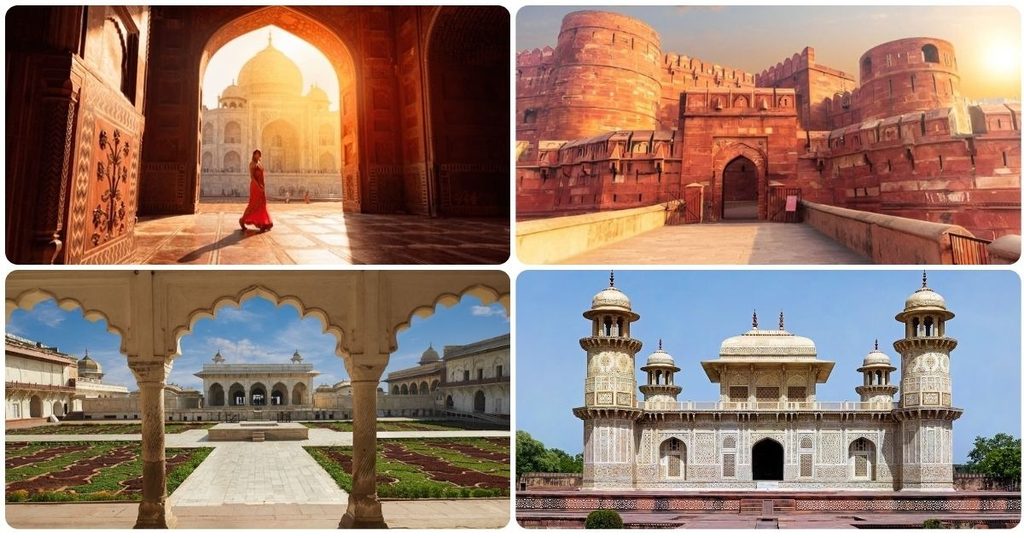
Agra’s Mughal heritage extends well beyond the Taj Mahal, and a few stops are worth adding if you have time.
- Agra Fort. A UNESCO World Heritage Site that Akbar began rebuilding in red sandstone from 1565, later embellished in marble by Shah Jahan. According to the Agra district tourism page, it is open all seven days, which helps on Fridays when the Taj Mahal is closed.
- Itmad-ud-Daulah. Often called the “Baby Taj”, this tomb was built by Nur Jahan for her father in the 1620s and is known for its delicate inlay work.
- Mehtab Bagh. A garden across the Yamuna with a view back toward the Taj Mahal.
Choose extra stops according to your time and interests instead of trying to cover everything at once. If you are comparing ways to reach Agra from Delhi for a day with additional sightseeing, the Taj Mahal tour from Delhi by superfast train is one rail-based option alongside road transfers.
Frequently Asked Questions About Taj Mahal Visiting Guide
What should first-time visitors know before visiting the Taj Mahal?
It is a large complex with security screening, gardens and a separate optional ticket for the main mausoleum. It is closed to general visitors on Fridays, hours follow sunrise and sunset, and rules on bags, food and photography apply. Check official pages before you go.
How early should I arrive at the Taj Mahal?
Arrive before opening if you want an unhurried start, and allow extra time for security and any queue. The official site lists opening 30 minutes before sunrise, which changes through the year, so check that day’s timing and avoid arriving near closing.
Do I need to book Taj Mahal tickets in advance?
Booking through official ASI channels is advisable because you settle your ticket category and date before arrival, though tickets can also be bought at gate counters. Use only official sites or the gate QR codes, and decide whether you want the extra mausoleum ticket.
What should I wear when visiting the Taj Mahal?
Wear comfortable, weather-appropriate clothing and walking shoes. The official pages do not list a dress code, but modest clothing is a respectful choice at a tomb and mosque complex. Add sun protection in summer and light layers on cooler mornings.
What items are not allowed inside the Taj Mahal?
The official do’s and don’ts page lists items such as drones, tripods, tobacco, liquor, food, knives, headphones, chargers and electrical goods other than cameras. Large bags can slow security. Rules change, so check the official page before packing.
Can I take photographs inside the Taj Mahal?
Photography is prohibited inside the main mausoleum, according to the official visitor information. In the gardens and grounds you can generally photograph, but drones and tripods are prohibited. Check current rules and follow staff instructions.
How long does a Taj Mahal visit usually take?
There is no official figure, but many local operators suggest two to three hours for a relaxed visit. Security, queues, the mausoleum interior, photography and rest breaks all change the total, so allow extra time with children or older relatives.
Is the Taj Mahal suitable for children and older visitors?
Many families and older travellers visit, but expect plenty of walking, sun and crowds. The official site mentions wheelchair and first-aid support at the ASI office and battery buses to the gate. Confirm availability, and access to the mausoleum, before you travel.
Is the Taj Mahal open every day?
No. According to the official Taj Mahal website, it is closed to general visitors on Fridays and open on other days, from 30 minutes before sunrise to 30 minutes before sunset on normal operating days. Special closures can occur, so check close to your travel date.
Can I visit Agra Fort on the same day as the Taj Mahal?
Often, yes. Agra Fort is open seven days a week, usually from around sunrise to sunset, and is a few kilometres from the Taj Mahal. Many itineraries pair them, allowing travel time between the two. Check the fort’s timings and tickets separately.
Plan Your First Taj Mahal Visit with Confidence
A good first visit comes down to three habits: check entry requirements through official sources, pack only what you need, and allow enough time to walk, look and rest instead of rushing between photo spots.
If you would rather leave the journey to and from Agra to someone else, India Beyond Travel offers private Taj Mahal tours from Delhi by car and by train. Choose the arrangement that fits your pace, budget and comfort, and confirm what is included before you book.