
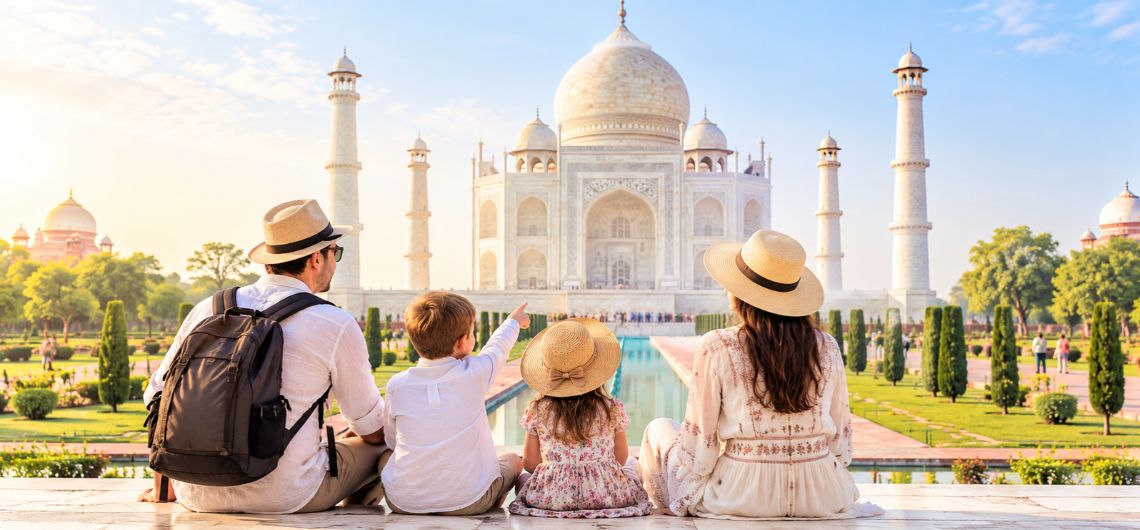
Parents often wonder whether visiting Taj Mahal with kids will turn into a long day of heat, queues and tired legs. It is a fair worry. The monument involves security checks, plenty of open-air walking and limited places to sit, and young children rarely follow an adult’s schedule. With some planning, though, a family visit can be rewarding and relaxed.
Is the Taj Mahal suitable for families with children?
Yes, in most cases. Children under 15 enter free, the gardens give them room to look around, and the story behind the monument suits curious minds. The visit works best when you plan around the weather, security rules, your child’s routine and a realistic pace. This guide covers walking, strollers, packing, travel from Delhi and ways to keep children interested, so you can decide what suits your family.
Is Visiting the Taj Mahal with Kids Worth It?
For many families, yes. The Taj Mahal was built by Emperor Shah Jahan between 1631 and 1648 in memory of his wife, Mumtaz Mahal. That love story gives children a simple way into the history. The symmetrical gardens, reflecting pools and white marble also make memorable photographs.
Expectations should match age, however. Babies mostly need comfort and shade. Toddlers may tire quickly and lose interest in architecture. School-age children usually enjoy stories and spotting details, while teenagers may appreciate the history and photography. The visit is rewarding, but it is not effortless for every family.
What Is the Best Time to Visit the Taj Mahal with Children?
Temperature shapes the day more than anything else. Mornings are generally cooler and gentler on small children, and the marble can become harsh and bright later in the day. Summer heat can tire young children quickly, so plan shorter outdoor stretches and regular water. In winter, mornings can be cold and sometimes foggy, so layers help.
Also think about your child’s rhythm. Aim to finish before nap time or a main meal rather than pushing through it. The Taj Mahal is closed on Fridays, and opening hours follow sunrise and sunset, so check seasonal timings on the official ASI website before you travel.
Families driving from Delhi sometimes consider an early departure, and a sunrise Taj Mahal and Agra tour by car is one way to arrange it. An early start suits some children and not others, since it means a very early wake-up. It also does not guarantee smaller crowds or ideal weather.
Can You Take a Stroller to the Taj Mahal?
This is one of the most common parent questions, and it deserves a careful answer. The official ASI visitor information we reviewed does not clearly state a stroller policy, so confirm the current rules with the Archaeological Survey of India or your tour operator before arriving. Do not assume strollers are allowed everywhere inside.
Consider the practicalities too. Entry involves security screening, and some areas have steps, uneven surfaces and crowds. A lightweight, foldable stroller is easier to manage than a large one. For babies and some toddlers, a soft baby carrier may be more convenient, since it keeps both hands free at security and on steps. Many families bring both and decide on the day.
How Much Walking Is Involved at the Taj Mahal?
You walk from the entrance gate through the forecourt and into the gardens, then along the central pathway towards the marble platform. Reaching the mausoleum involves removing shoes or wearing shoe covers, and there may be queues. Battery buses run between the parking area and the gate, which shortens the approach.
None of this is extreme, but the combination of walking, standing and waiting adds up for toddlers. Let children walk in short stretches, then carry or seat them when they flag. Take breaks to one side of the paths so you do not block other visitors, and plan around two hours or so rather than a rushed hour. Allow longer if your family likes to linger.
What Should Parents Pack for a Taj Mahal Visit?
Pack light. Security is strict, and large bags slow everyone down. A small bag with essentials is enough.
- Comfortable, closed walking shoes that are easy to slip off
- Weather-appropriate clothing, with a light layer for cool mornings
- Hats and sun protection for warmer months
- Drinking water: the ASI states water bottles are allowed, though rules can change
- Baby essentials such as nappies, wipes and a change of clothes
- Medication and hygiene items, such as hand sanitiser and tissues
- A lightweight carrier, if it suits your child
Eating is prohibited inside the monument, and the ASI discourages big bags and books. Feed children before you enter. For infant milk or baby food, check the current rules with security staff, since policies may change.
How Can Parents Keep Children Comfortable During the Journey from Delhi?
The road journey from Delhi to Agra takes roughly three and a half to four hours, depending on traffic, so it deserves as much planning as the visit itself. Choose a departure time that fits your child’s sleep and meals rather than the busiest traffic hours.
Think about child safety first. If your child needs a car seat, confirm in advance whether one can be provided, and bring your own if necessary. Check that the air conditioning works well, plan breaks for toilets and stretching, and keep water, snacks, wipes and a change of clothes within reach rather than in the boot. For children prone to motion sickness, a front-facing seat, fresh air and light meals can help.
If you prefer a driver and a single plan for the day, a Taj Mahal tour from Delhi by car offers private road transport. Ask the operator directly about car seats, stops and other child-specific needs, as these should be confirmed rather than assumed.
How to Make the Taj Mahal Interesting for Children
Young minds engage better with stories and small challenges than with dates and facts.
- Tell the story simply. Shah Jahan built the Taj Mahal to remember his wife, Mumtaz Mahal. For younger children, “a king built a beautiful home to remember someone he loved” is enough.
- Spot the symmetry. Ask children to find what matches on both sides of the central pool.
- Count and look. Count arches, domes or minarets and notice the patterns on the walls.
- Hunt for flowers. Look for floral designs worked into the marble.
- Sketch or describe. Ask older children to draw or describe their favourite feature.
- Photograph with care. Encourage respectful photography and remind them that photography is not allowed inside the main mausoleum.
Safety Tips for Visiting the Taj Mahal with Kids
Crowds, steps and heat are the main concerns. A few simple habits help.
- Keep children within arm’s reach in crowded areas, and consider holding hands at security and stairs.
- Agree a meeting point in advance, especially because men and women usually queue separately at security.
- Offer water regularly and watch for signs of tiredness or overheating.
- Protect children from extreme temperatures with hats, shade and layers.
- Follow security instructions and staff directions.
- Supervise children closely around steps, platforms and raised edges.
- Respect restricted areas and do not let children climb on or lean against the monument.
Is a Luxury Car Worth Considering for Families Visiting Agra?
Sometimes. A more comfortable vehicle can make a real difference for families with young children or elderly relatives, where the journey is the harder part of the day. Look at practical features rather than the label: comfortable seating, enough space for permitted personal belongings, reliable air conditioning, and a vehicle that suits your family size.
Child restraint arrangements matter too, so ask the operator what can be provided. Choose comfort over unnecessary luxury. Families who value a smoother ride may want to look at a Taj Mahal tour by luxury car, while others will be perfectly happy in a standard air-conditioned car.
Can Families Visit Agra Fort After the Taj Mahal?
It is possible, but it is not essential. Agra Fort is a large UNESCO World Heritage Site with walking, ramps and steps, and its red sandstone can feel hot in the middle of the day. After the Taj Mahal, children may already be tired, so lunch and a rest matter before another sightseeing stop.
Be realistic about age. Older children may enjoy the fort’s scale and stories, while toddlers may only manage a short visit. If energy is low, shorten the itinerary, visit only part of the fort or leave it for another day. A slower schedule is a perfectly good choice, and no family needs to see every attraction.
Is Travelling by Train to Agra a Good Option with Children?
Train travel suits some families well. A train can feel calmer than a long road journey, and children can move around, though schedules, station crowds and luggage need planning. Think about how you will reach and leave the railway station in Delhi, how you will manage bags and belongings, and how to board with young children.
In Agra, plan the transfer between the station and the monuments, and allow extra time. Families who like a fixed schedule or dislike long drives may prefer rail, while those with lots of equipment or unpredictable routines may find a car easier. If you are weighing it up, a Taj Mahal tour from Delhi by superfast train is one rail-based option to look at.
Common Mistakes Parents Should Avoid
- Planning too many attractions. One main sight and one lighter stop is plenty for most families.
- Ignoring the heat and season. Check the weather and adjust your timing.
- Carrying unnecessary items. Large bags slow down security.
- Underestimating walking and waiting. Queues, stairs and standing all tire small children.
- Forgetting food and rest. Plan meals and breaks before and after, since eating is not permitted inside.
- Choosing an inconvenient schedule. A very early or late day can leave children exhausted.
- Not checking current rules. Policies on tickets, items and timings can change.
Frequently Asked Questions
Is the Taj Mahal suitable for toddlers?
Yes, with realistic expectations. Toddlers can enjoy the gardens and open spaces, but the walking, queues, heat and security checks can be tiring. Visit in cooler hours, keep the stay short, bring a carrier or lightweight stroller if allowed, and plan food and rest before and after entering.
Are strollers allowed inside the Taj Mahal?
The official ASI visitor information we reviewed does not clearly state a stroller policy, so it is best to confirm before you travel. Even if one is allowed, steps and crowds can make it awkward. A lightweight stroller or a baby carrier is usually easier to manage.
Do children need tickets for the Taj Mahal?
The ASI states that children below 15 years enter free. Age verification may be requested, so carry a passport or other age proof. Note that the mausoleum has a separate fee for adults who wish to enter. Ticket rules can change, so check the official ASI website.
How long should families spend at the Taj Mahal?
Around two hours is a reasonable guide for many families, though this varies. Families with babies or toddlers may prefer less, while older children interested in history or photography may stay longer. Build in breaks, avoid rushing, and leave time before and after for food and rest.
Can parents carry baby food inside the Taj Mahal?
Eating is prohibited inside the monument, and food items are generally restricted at security, so rules for infant milk and baby food are not clearly stated in the official information we reviewed. Feed your baby before entering and confirm current policy with security staff or the ASI.
Is the Taj Mahal safe for young children?
Generally yes, with sensible supervision. The main concerns are crowds, heat, steps and raised platforms. Keep children close, agree a meeting point, offer water regularly and protect them from the sun. Follow security instructions, and do not let children climb on or touch restricted areas.
What is the best age to visit the Taj Mahal?
There is no single best age. Babies can visit comfortably with planning, while children from around six or seven may start to enjoy the story and details. Teenagers often appreciate the history and photography. Choose based on your child’s stamina and interests rather than age alone.
Is it better to travel to Agra by car or train with kids?
It depends on your family. A car offers door-to-door convenience and flexibility with luggage and routines, but the road journey is long. Trains can feel calmer but involve station transfers and boarding. Consider your child’s age, how much equipment you carry and how well they travel.
Final Thoughts: Making Your Taj Mahal Family Visit Memorable
A good family visit comes down to pace and preparation. Choose a time of day that suits your children, keep your bag light, and check current monument rules before you arrive. Pick transport that keeps the journey comfortable, and do not try to fit in every attraction. Add a few simple games, such as spotting patterns or flowers, so children feel part of the visit rather than carried through it. If you would like help planning a relaxed family day in Agra, India Beyond Travel can help you explore suitable options.